
EPTEC is a leading government and defence contractor in Australia, renowned for delivering robust and reliable solutions in the most challenging industrial environments. With a strong commitment to innovation and efficiency, EPTEC sought to enhance its paint line for defence products, aiming to eliminate operational inefficiencies and maximise productivity.
Project Challenge
The existing paint line setup at EPTEC was cumbersome, lacking mobility and occupying valuable floor space when not in use. The company required a versatile and rugged horizontal trolley capable of accommodating various components, from vehicle parts to specialised gear, while optimising their facility layout. The objective was to design a mechanical solution that seamlessly integrated practicality with innovation, tailored specifically to the demanding environment of defence manufacturing.
Solution Development
To address the challenge, our team conducted an in-depth analysis of EPTEC’s operational processes. Recognising that defence products are typically heavy, irregularly shaped, and require durable coatings, we conceptualised a trolley that could withstand heavy loads and adapt to diverse dimensions while enduring the rigours of a busy workshop.
We meticulously evaluated the facility’s workflow to identify key bottlenecks and space constraints, which informed our initial design sketches.
Trolley Design Features
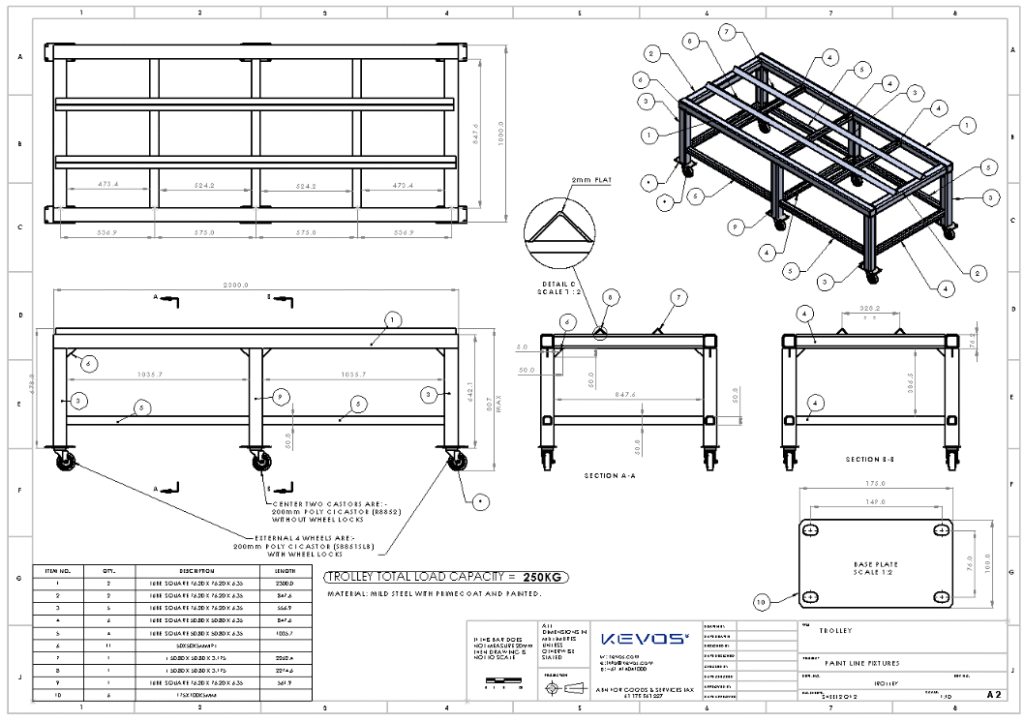
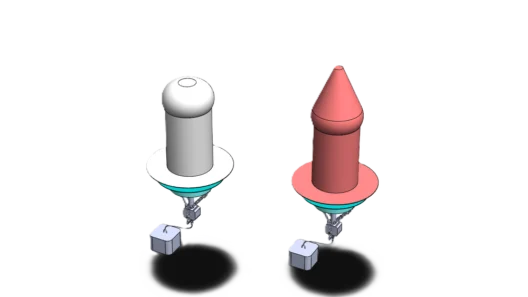
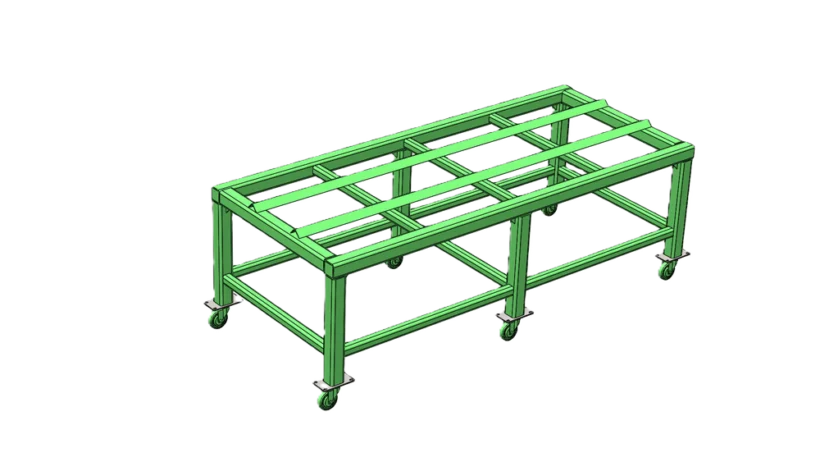
One of our standout designs, developed into a detailed 3D CAD model, features a robust rectangular frame constructed from green-painted steel or aluminium beams. The green finish adheres to military specifications, while the welded joints ensure maximum durability under significant weight.
Key specifications include:
- Dimensions: A top platform measuring approximately 1.5 meters long by 0.6 meters wide, designed with an innovative grid of longitudinal and transverse beams that provide secure cradling for various gear without adding unnecessary weight and allowing for airflow.
- Height: At 0.8 meters tall, the trolley is supported by four sturdy legs enhanced with diagonal bracing at the corners to prevent wobbling during transport.
- Mobility: Equipped with four fixed caster wheels, 100-150 mm in diameter, each rated for 200-300 kg, the trolley is designed for smooth, straight movement, making it ideal for the dynamic environment of a defence workshop.
In addition to the basic design, we proposed several enhancements to maximise functionality:
- Adjustable Supports: Designed to accommodate different loads and part shapes.
- Rotating Top: Facilitates full-circle access, eliminating uncomfortable reaches and ensuring thorough finishing.
- LED Lighting and Tool Hooks: For improved visibility and easy access to necessary tools.
- Collapsible Frame: For efficient storage, allowing the trolley to be folded and stacked when not in use.
Project Outcome
Despite our thorough planning and design efforts, the project faced challenges due to budget constraints and stakeholder alignment, ultimately placing it on hold. However, the designs developed through this initiative provided EPTEC with a comprehensive blueprint for rethinking their paint line setup. The outcome spotlighted existing inefficiencies and established a foundation for future improvements.
This project exemplifies our mechanical design capabilities, showcasing EPTEC as a formidable player in the defence sector while highlighting the trolley’s technical specifications and innovative features.
Conclusion
The horizontal trolley design stands ready for implementation whenever the conditions allow, with adaptability for future customisation. This case reinforces our skill in delivering precise engineering solutions that meet complex requirements in the defence industry.
If you or your clients seek expert engineering design and drafting support, our team is available to collaborate on your next project. Contact us to learn how we can help turn your vision into reality!