

In the realm of maritime safety, navigation buoys play a crucial role in guiding vessels, particularly in areas with fluctuating water levels. Traditional buoys often struggle to maintain visibility when water levels rise, leading to safety concerns. To address these challenges, EPTEC embarked on the development of an innovative telescopic buoy design, aimed at enhancing visibility and safety across varied water conditions.
Challenges
Navigating busy rivers presents unique challenges, especially during periods of fluctuating water levels. Fixed-height buoys may become submerged, hindering their effectiveness and increasing the risk of accidents. Recognising this issue, our goal was to design a buoy system that adapts to changing water levels while ensuring maximum visibility for mariners.
Stakeholders
The project was influenced by several key stakeholders, including:
- Maritime safety authorities concerned with ensuring safe navigation.
- Construction companies that needed reliable markers in construction zones.
- Environmental agencies focused on maintaining safe waterways.
Design Process
The design process commenced with an extensive review of existing buoy technologies. Through careful analysis, we identified that the lack of adjustability in buoy height was a critical flaw. Our team focused on integrating telescopic mechanisms to create a buoy that could extend and retract based on water level changes.
Innovation
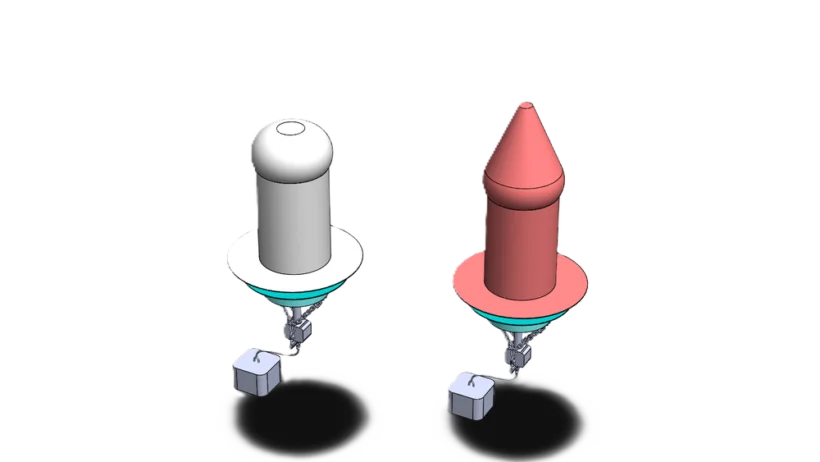
The core innovation of the EPTEC telescopic buoy is its buoyancy-driven telescopic mechanism. The buoy comprises multiple concentric sections that slide into one another. The base floats on the water’s surface, and as water levels rise, the buoyant force drives the upper sections upwards, keeping the buoy visible above the surface.
Design Features
Key design features include:
- Telescopic Mechanism: Enables the buoy to adjust its height dynamically, ensuring clear visibility at all times.
- Stabilising Fins: These fins prevent excessive tilting in turbulent waters, enhancing safety and reliability.
- Durable Materials: High-grade, corrosion-resistant materials are utilised to ensure longevity, even in harsh marine environments.
Visual Concept
The envisioned buoy boasts a sleek, cylindrical design with a bright, reflective top section. As water levels rise, the buoy gracefully extends, allowing the upper sections to unfurl like a telescope. This design ensures that warning signals and navigation aids remain visible, regardless of the surrounding water depth.
Advantages
The EPTEC telescopic buoy offers numerous advantages:
- Enhanced Safety: Maintains visibility across varying water levels, significantly reducing accident risks.
- Cost-Effectiveness: Although initial costs are higher, long-term savings from reduced maintenance and accident prevention justify the investment.
- Environmental Friendliness: Constructed from sustainable materials, it minimises environmental impact.
- Versatility: Applicable in various scenarios, including construction zone marking and navigation guidance in rivers and seas.
Project Outcome
Despite the potential of the telescopic buoy design, the project did not proceed to production due to budget constraints and shifting stakeholder priorities. Nevertheless, the concept represents a significant leap in buoy technology, showcasing our team’s innovative capabilities in addressing complex problems.
Insights Gained
This project provided valuable lessons on designing for variable environmental conditions and balancing innovation with cost considerations. The insights gained have informed our approach to future projects, driving us to continually explore new engineering possibilities.
Conclusion
The EPTEC telescopic buoy design concept stands as a testament to our commitment to safety and innovation in engineering. While it remains a concept, it holds significant promise for revolutionising maritime safety and could pave the way for superior waterway navigation solutions in the future.
For expert engineering design and drafting support, EPTEC is prepared to collaborate and assist in making your projects a success. Contact us to explore how we can contribute to your next venture!